
Interview by Jasmine Laurenti
“When you photograph people in colour, you photograph their clothes. But when you photograph people in black and white, you photograph their souls!” Ted Grant
And it is precisely Ted Grant — a British activist of South African origin — who inspires Andrea Federico Santicoli, an adopted Lugano resident like me: one of the gifts the Clubhouse app gave me during the challenging three-year period from 2019 to 2022.
That is where our voices first met. Then we arranged to meet in the city centre to continue our conversation face to face, about the deeper meaning of life.
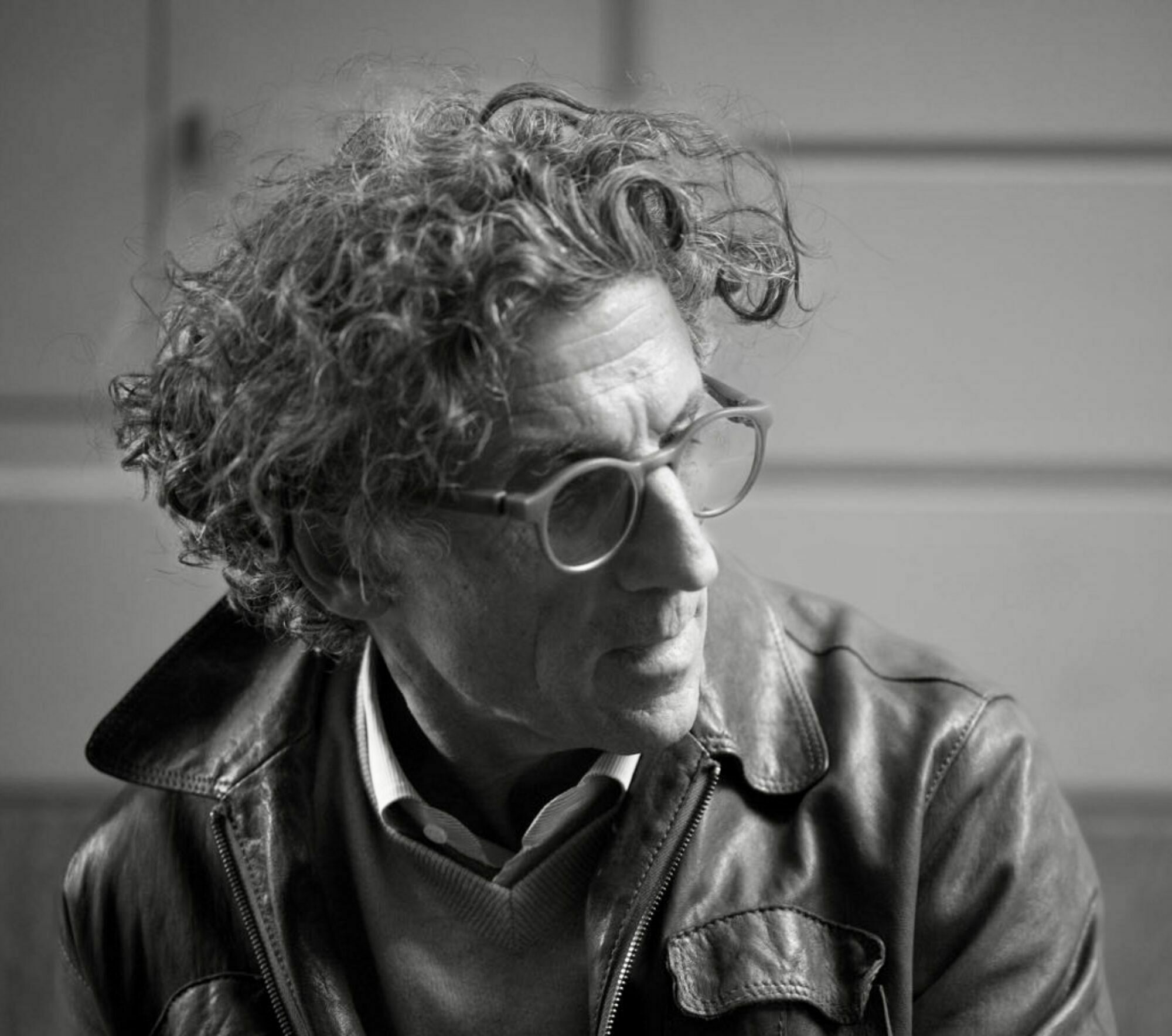
And it was there that I discovered Andrea lives life from a different perspective: that of someone who looks at the world from a wheelchair.
It was not always like this. He told me about his motorbike accident, and about that ordinary moment of distraction which, by causing the fall, would prove - unless a miracle happens - irreversible.
But not only did he refuse to give up. He turned that setback into a gift for himself and for the world at large: a new point of view.
Yes, because one day — not even he could explain how or why — he had the wild idea of buying his first camera. From there, he began again, setting out on a new and exciting adventure full of emotion, travel, surprises, stories and new encounters.
I suspect he does not care for the word “career”, and neither do I. And yet I am certain this passion of his will take him far, far further than he can imagine.
And there he is, in the role of a photographic “Lupin”, stealing shots wherever the opportunity presents itself. Since 8 March 2020, so as not to miss a single one, he has worn around his neck his inseparable Leica M Monochrom, “Margot”. Together, the two of them create wonders.
When I ask him how he manages to capture such beautiful moments, Andrea smiles and cannot quite find the words. He follows his instinct, and there he is, taking the photograph in the right place at the right time. He “steals” the moment, only to give it back to the person photographed later on, by email or WhatsApp.
Looking at his black-and-white images, it is impossible not to sense his essence as a curious explorer in love with life and with all the moments it holds… Moments most of us miss through distraction, but which he catches and offers to us like gems of extraordinary beauty, spontaneity and freshness.
His mentors are the great masters of black-and-white photography: Henri Cartier-Bresson and Robert Doisneau, the men who turned street photography into an Art devoted to spontaneity, immediacy, and the emotion of storytelling distilled into a single, unrepeatable image.
The protagonists of the stories contained within a single shot are people of every age, alone or in pairs, encountered in the street, along the lakeside, in squares, by fountains, in cafés… People immersed in their everyday lives, busy playing, kissing, talking, embracing, reading a book, sunbathing, playing a musical instrument… Not posing, but revealing themselves through a smile, a glance, an ironic gesture, expressing the ineffable. Flowers caught as they half-open to life, releasing their truest fragrance.
In the images drawn from nature, from the street… In people’s faces… The images are many, for two reasons. The first is that I always have my camera with me, so I photograph what I see, what I live, what I am. The second reason is that I am not confined to a single theme. Even though I am always drawn to the human being, whom I love, I am endlessly curious to capture the soul of everything around me, human beings and things alike…
I usually prefer to steal the shot and then share it with the person, getting in touch so I can send them the photograph. You see… a stolen shot, in itself, is a soulless photograph, because it has no story… I am thinking of my first photographs, which I still keep with great affection, taken of some homeless people, mainly in Milan. I stopped doing that kind of photography because it felt as though I was stealing their soul, just like that, without saying a word… Then I began asking permission to take my photographs, I would talk to them, listen to them… It was better, more constructive… When we know the story of what is around us, everything takes on meaning.
It is a beautiful idea, but I am already amazed that I managed to take these photographs at all. I still cannot quite understand how I came upon this hobby — I thank God for it — which has allowed me to meet people, to travel, to spend my time in a constructive way and, above all, to find a mental and emotional outlet, which is sometimes very important.
I believe photography is the mirror of the photographer’s soul. We may use the same camera, but the photographs will be different. Not necessarily better or worse, but different.
In mine there is certainly a spiritual side. I increasingly see a progression, without even meaning to; it is a kind of growth, as in all things into which you pour your soul. I believe a certain evolution can be seen, a certain change, and that gives me pleasure.
To my followers I would like to say that everything is evolving, and what I am today, what my photography is today, is not necessarily what it will be tomorrow, because mine is always a search, a going deeper into the details, leaving behind those things that once seemed beautiful, but have now matured and no longer carry the same vibration they once did.
So you begin to look for other things that bring emotion, joy…
What I always hope is that I will find themes and be able to develop them, because that is where I feel I am lacking, in the sense that I never really have precise ideas about what I want to photograph. At first it was a little frustrating, then I realised it is beautiful that way too, because I allow myself to be surprised.
Perhaps I work the other way round: by taking a certain kind of shot, I see the project beginning to take shape. And that happened with lakes, mountains, gateways, walls… After two or three shots of that kind, I could see that I liked them, and I carried on.
It happened with the photographs I took of people with tattoos on their faces. I took one, then another, and another again… Then, by talking with them, my preconceptions about them were exposed for what they were.
So I thought that, if I took more photographs like those, I could show them to the public, allowing other people like me to think again…
The images arrived immediately, but not their soul, and so visitors would sometimes feel a sense of disgust and be disturbed by the fact that a person could tattoo their whole face.
And I say to myself: “Why not? If this person is harming no one and is simply making art on their own body, why should they not be allowed to do it?”
All of this came from having spoken with those people. That is why the story matters.
Yes. It moves me. It moves me because it is a photograph I unfortunately no longer even have. The disk where I had stored it broke, so it cannot be recovered. It was the photograph I had taken of a little African girl who lives here in Lugano. She has Down’s syndrome, and she is such sweetness, such beauty… I printed the photograph in A4 format — I used to do that often at the time, at home, with other photographs too — and I gave it to her mother. It is one of the photographs that has stayed with me most deeply. I posted it on Instagram, with her mother’s permission.
(He hands me his phone, showing me the photograph recovered from his Instagram profile: she really is utterly sweet!)
I am in love with all my photographs, even the ones I have yet to take. Mine is a continuous love… I can be stressed, angry, feel that everything is going wrong, but if I manage to take a few shots, everything loosens and clears, and I become happy, calm and serene again. That is the love I have for my camera, which is an extension of myself. On the very few occasions I have gone out without it, it has felt as though I had left the house without my clothes on.